


Table of Contents
- Is There a Deadline to Take Legal Action After a Motorcycle Crash?
- What Should You Do After a Motorcycle Crash in Florida?
- Why Does Working With a Florida Motorcycle Injury Lawyer Matter?
- Our Clients Experience Our Dedication
- How Do We Document a Medical Timeline That Insurers Respect?
- What Florida Laws Can Affect a Motorcycle Injury Claim?
- What Changes When a Government Entity May Be Involved?
- How Does Insurance Work After a Motorcycle Crash in Florida?
- What Compensation Can You Recover After a Motorcycle Crash?
- What Factors Can Change Settlement Value in a Motorcycle Case?
- What Are the Most Common Causes of Motorcycle Accidents in Florida?
- Common Injuries in Motorcycle Accidents
- What Evidence Helps Prove Fault and Damages in a Motorcycle Claim?
- How Do You Choose the Right Motorcycle Accident Lawyer in Florida?
- FAQ: Florida Motorcycle Injury Claims
- Get Help From Trusted Motorcycle Accident Lawyers
A serious motorcycle crash can change your life in seconds. Medical bills can rise quickly, and time off work can cut your income. Recovering from an injury can significantly disrupt your daily routine and normal activities. During this challenging time, insurance adjusters may reach out to you, requesting statements and offering quick settlements. It’s important to be careful. These settlements can occur before you fully understand how your injuries will affect your life in the long run. Consulting a Motorcycle Accident Lawyer can help you navigate these complexities and ensure you receive the compensation you deserve.
If you were hurt in a motorcycle accident in Florida, you may get money if someone else was careless. Compensation can cover medical expenses, lost wages, and non-economic harm. It can show how your injuries greatly limit your daily activities and overall quality of life. If you lost a loved one, a wrongful death claim may apply.
A Florida motorcycle injury lawyer can safeguard your rights after a crash. They can preserve key evidence and keep the investigation focused on what caused the collision. This strong focus helps prevent unfair stereotypes about riders. It stops these stereotypes from affecting the outcome of different situations and perceptions.
FREE CONSULTATION: Call 855-529-3366. No fee unless we recover compensation for you.
Is There a Deadline to Take Legal Action After a Motorcycle Crash?
Florida law sets filing deadlines (statutes of limitations). In many negligence cases, the deadline is two years. Many wrongful death claims also have a two-year deadline. Exceptions can apply, but waiting too long can end a case even when liability is clear. It is important to meet with a motorcycle injury lawyer early. This helps protect your legal options. It also keeps important evidence safe. Evidence can fade or be lost over time. Acting promptly can significantly impact the outcome of your case.
What Evidence Disappears First After a Motorcycle Crash?
Motorcycle cases often rise or fall on early preservation. The most time-sensitive evidence usually includes:
- Video from nearby businesses, traffic cameras, dashcams, and doorbell systems.
- Scene evidence such as skid marks, yaw marks, gouges, debris fields, fluid trails, and rest positions.
- Vehicle and motorcycle condition, including crush patterns and contact points.
- Electronic data, depending on the vehicles involved.
- Witness memory, which fades quickly and becomes less reliable over time.
Preserving evidence early is not just helpful, it is a smart strategy. It can greatly affect the outcome of a situation. By taking proactive steps, you can reduce the chances of insurers trying to change the story after the scene is gone.
What Should You Do After a Motorcycle Crash in Florida?
Your health comes first. Seek medical care immediately, even if you feel “mostly fine.” Adrenaline can mask concussion symptoms, internal injury warning signs, and spinal damage.
When it is safe, these steps can protect both your health and your claim:
- Call 911 and request a crash report.
- Photograph vehicles, road markings, debris, traffic signals, and visible injuries.
- Collect names and contact information for witnesses.
- Avoid recorded statements and quick releases until you have legal advice.
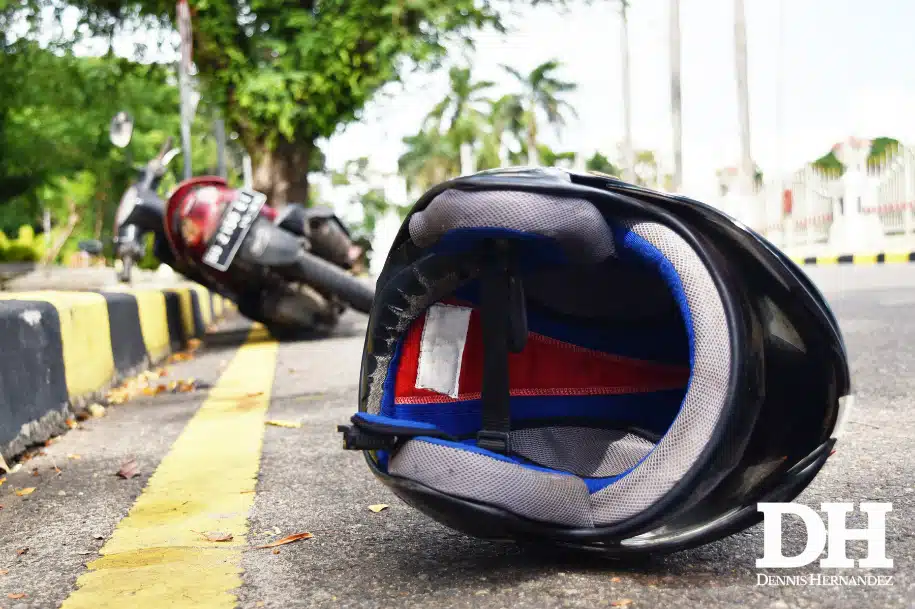
- Preserve your helmet and gear in a clean, dry place, and avoid repairs or cleaning.
That last step matters more than people realize. In a serious case, gear damage can help prove impact mechanics, point of contact, and crash severity.
What Do Florida Motorcycle Crash Statistics Show?
Florida’s helmet statute is specific. In general, it requires compliant protective headgear, and it also requires an approved eye-protective device.
Key points that frequently matter in injury litigation include:
- The statute describes headgear that complies with Federal Motor Vehicle Safety Standard 218.
- It requires an eye-protective device approved by the department.
- Riders over 21 may ride without a helmet only if they are covered by a policy providing at least $10,000 in medical benefits for crash injuries while operating or riding a motorcycle.
In injury cases, helmet issues often become a damages argument, not a crash-causation argument. Insurers may try to imply a rider “chose the outcome.” A trial-ready claim separates two questions clearly: what caused the crash, and what caused the injury severity.
Nationally, motorcycle fatalities remain a major concern. In 2023, U.S. data reported 6,335 motorcyclist deaths. These numbers reflect real families facing medical uncertainty, income disruption, and long recoveries. They also highlight the lengthy and frequently challenging journey to recovery that awaits many injured riders.
Why Does Working With a Florida Motorcycle Injury Lawyer Matter?
Motorcycle claims are different from minor car accident cases because injuries are often severe and long lasting. Insurance companies often treat motorcycle cases as high risk. They may act quickly to control the narrative, limit treatment through pressure tactics, or shift blame to the rider. Early involvement from a motorcycle injury lawyer can make a measurable difference.
A strong legal team can:
- It is crucial to preserve time-sensitive evidence in any incident investigation. This includes important elements like video footage, skid marks, debris patterns, and the final positions of the vehicles.
- It is important to find all parties responsible for an incident. This may include drivers, employers, vehicle owners, and contractors. This is especially true when the facts and evidence support these claims.
- Build a strong case for damages by using detailed medical records. Include the opinions of doctors who treated you. Bring in qualified experts when needed to support your argument.
- Manage all communications with your insurance providers. This will help you avoid recorded statements. It will also prevent unfair blame shifting during the process.
- From the very first day, it is essential to prepare the case thoroughly for trial. This proactive approach frequently enhances your leverage when negotiating settlements, leading to more favorable outcomes.
Our Clients Experience Our Dedication
We attain results by showcasing compassion, understanding, and unwavering commitment. Our dedication to our clients is clear as we respond to their calls at all hours, visit them in the hospital, and passionately fight for the compensation they justly deserve, among other initiatives. Below are a few examples of unsolicited testimonials we’ve gathered from clients in Florida:
”
Client Testimonials
“Everyone at Dennis Hernandez has been very helpful. Since this is my first time having to see a lawyer for a car accident, they have been so instrumental in helping me understand the whole process of my case. I would recommend anyone in this situation to come and speak with a lawyer here. Thank you all for everything!”
– Kimberly R.
”
Client Testimonials
“My sister was involved in a vehicle accident during the 1st day of her work visit in 2017. While not knowing anyone in Florida and, my sister being a badly hurt, non english speaking foreigner residing in a different country without ability to be present, her case was somewhat lengthy and complex to handle. I believe choosing the law firm of Dennis Hernandez Associates P.A. over others to represent her was the right move.”
– Peter T.
”
Client Testimonials
“Dennis Hernandez’s team were great, their whole staff was very helpful and patient with me after I was involved in an accident. They answered all of my questions and closed the case much quicker than I expected. This was my first time needing to hire an attorney, and I’m glad I chose them.”
– Meli H.
”
Client Testimonials
“We would like to thank the office of Dennis Hernandez and associates for assisting us with our accident case. Dennis Hernandez staff could not have been any nicer. It made a tough time better and we thank everyone for their kindness and professionalism throughout the entire time. We highly recommend their services.”
– Ida K.
”
Client Testimonials
“I love them. They really care about my problems after my crash. I had dropped another lawyer before going to them and they made me feel good. Their team worked hard to get me what I needed and I am grateful for that. Couldn’t be any happier. Thanks!”
– J.T.
”
Client Testimonials
“I would 100% recommend this firm! Dennis Hernandez & Associates were excellent! They were extremely responsive and very informative every step of the way. They put my mind at ease during this stressful time. I couldn’t have asked for a better team! Thank you both!”
– Sara V.
”
Client Testimonials
“This is an incredible team of lawyers. Dennis is brilliant and he will attack every point the defense uses against you and he will make them look silly, his trial skills are better than TV. I would be happy with any of the lawyers separately, any day, any case, but together they are unstoppable. If you are hurt call Dennis Hernandez and his Associates, listen to what they say, believe in their methods and they will take care of your case. If it goes to trial, they will be the best you can find. I know, because they just won my case in a huge way.”
– Michael W.
How Do We Document a Medical Timeline That Insurers Respect?
Insurers look for gaps, inconsistent symptom reporting, and incomplete records. A trial-ready file organizes care in a clean timeline that shows how symptoms appeared, how treatment progressed, and why the medical recommendations were reasonable.
That usually includes:
- EMS and emergency department records, including initial symptom notes.
- Imaging orders and radiology results, tied to complaint history.
- Specialist referrals and follow-ups that show progression, not exaggeration.
- Work restrictions and functional limits that match medical findings.
- A summary of future care needs when prognosis supports it.
What Florida Laws Can Affect a Motorcycle Injury Claim?
In Florida, there are important rules that often affect liability, deadlines, and damages in legal cases. Gaining a solid understanding of these regulations can significantly aid you in anticipating the arguments that insurance companies typically employ.
What Does Florida’s Comparative Fault Rule Mean for Riders?
Florida uses comparative fault in many negligence cases. A jury can assign fault percentages to multiple people or entities. Damages are reduced by the claimant’s percentage of fault. In many negligence actions, a claimant found more than 50 percent at fault may be barred from recovering damages.
This is precisely why early evidence holds significant importance in the claims process. Insurers frequently focus on critical factors such as speed, lane position, and visibility claims. These specific issues can greatly influence the determination of fault percentages, ultimately affecting the outcome of the case.
What Changes When a Government Entity May Be Involved?
Some crashes involve roadway defects, missing warnings, unsafe work zones, or maintenance failures. When a public entity or contractor may be responsible, the case often becomes more technical. Control, notice, and documentation become central issues, and additional procedural requirements may apply.
From a practical view, these cases often need quick action. It is important to find out who controlled the road condition. We also need to know who had maintenance duties. Lastly, we should check what records show notice and past complaints.
What Should You Know About Florida’s Helmet Rule?
Florida has a motorcycle helmet statute that generally requires compliant protective headgear for riders and passengers under 21. Riders 21 or older may ride without a helmet if they meet the statute’s insurance requirement. Even when you complied, insurers may still raise helmet-related arguments in head injury claims. Solid medical documentation and early evidence preservation help counter those tactics.
How Does Insurance Work After a Motorcycle Crash in Florida?
Coverage often determines whether a strong claim can be paid in full. Motorcycles are often treated differently than cars in Florida’s no-fault system. This can surprise people who think Personal Injury Protection (PIP) works the same way.
In many cases, PIP may not cover motorcycles like it does for regular cars. It is important to review your insurance coverage early. This helps make sure you have enough protection. Depending on the policies involved, claims may rely on:
- The at-fault driver’s bodily injury liability
- Uninsured or underinsured motorist coverage (UM or UIM), if you purchased it.
- Medical payments coverage (MedPay), if available.
- Health insurance and other benefits.
Doing a careful policy review at the start of a case can show different coverage options that may not be clear right away. This proactive approach helps protect against insurers who may exploit incomplete timelines or misinterpret statements. This ensures a fairer process for everyone.

What Compensation Can You Recover After a Motorcycle Crash?
A motorcycle injury claim includes financial losses and human losses. Financial losses can include medical bills and lost wages. Human losses can include pain and suffering. The overall value of a case is greatly affected by a few key factors. These include the strength and clarity of the proof of liability. The severity and long-term impact of the injuries also matter. Finally, the quality and thoroughness of the documentation provided are important too.
What Are Economic Damages?
- Past and future medical expenses.
- Rehabilitation, therapy, and home care needs.
- Medication and medical devices.
- Lost wages and reduced earning capacity.
- Motorcycle repair or replacement and related expenses.
What Are Non-economic Damages?
- Pain and suffering.
- Emotional distress.
- Loss of enjoyment of life.
- Disability and disfigurement impacts.
What Damages Can Be Claimed in a Wrongful Death Case?
- Funeral and burial costs.
- Loss of support and services.
- Other damages available under Florida law.
What Factors Can Change Settlement Value in a Motorcycle Case?
It is important to know that there is no single “average settlement” amount for motorcycle accident cases. The results of these situations can change a lot. This depends on many factors. These include the details of the incident and the strength of the evidence presented. It also depends on the insurance options available to those involved in the case.
What Often Increases Case Value?
- Clear liability proof, including video, credible witnesses, and reconstruction support.
- Serious injuries with objective findings, supported by imaging and specialist opinions.
- Permanency and future care needs, including surgery, therapy, and home assistance.
- Documented work impact, including missed time and reduced capacity.
- Higher available insurance limits, including UM or UIM coverage.
What Often Reduces Case Value?
- Evidence gaps, including missing video, missing witnesses, or delayed documentation.
- Comparative fault arguments that are not rebutted with objective proof.
- Treatment gaps or inconsistent reporting that insurers frame as “unrelated.”
- Coverage limitations that cap what can realistically be collected.
A strong claim is based on facts that can be supported by evidence. This makes sure it is real. Additionally, it anticipates and prepares for the counterarguments that are likely to arise during the negotiation process, enhancing its effectiveness.
What Are the Most Common Causes of Motorcycle Accidents in Florida?
Gaining a deeper understanding of common crash patterns is absolutely essential, as it empowers investigators and experts to meticulously reconstruct the sequence of events that transpired during the incident. This knowledge helps us find the causes of the crash. It also plays an important role in preventing similar events in the future.
Common causes include:
- Drivers failing to see motorcycles, including blind spots, unsafe lane changes, and left turns across a rider’s path.
- Distracted driving, including texting and in-car screens.
- Speeding and aggressive driving by any vehicle operator.
- Impaired driving involving alcohol or drugs.
- Rider inexperience and loss of control.
- Dangerous road conditions, including wet pavement, potholes, loose gravel, and debris.
- Dooring crashes when occupants open doors into a rider’s path.
- Sudden weather changes that reduce traction and visibility.
Common Injuries in Motorcycle Accidents
Motorcycle injuries are often severe because the rider’s body absorbs forces that a vehicle cabin would otherwise reduce. Many riders need emergency transport, surgery, inpatient hospitalization, and extended rehabilitation.
Common injury categories include:
- Orthopedic fractures and joint damage: Wrist and forearm fractures are common when riders brace for impact. Tibia and fibula fractures often require surgical fixation. Shoulder injuries can involve rotator cuff tears, labral tears, or dislocation. Pelvic fractures can be life-altering and may require long rehabilitation.
- Spinal injuries: Herniated discs, vertebral fractures, and nerve impingement can cause chronic pain and weakness. Severe cases involve spinal cord damage with partial or total paralysis. These injuries often require long-term therapy and mobility support.
- Traumatic brain injury (TBI): TBIs range from concussion to permanent impairment. Even “mild” TBIs can produce headaches, balance issues, sleep disruption, irritability, and memory problems that affect work and relationships. Strong claims link symptoms to treatment notes and objective testing when appropriate.
- Road rash, degloving, and infection risk: High-friction injuries can look “surface-level” but still cause nerve damage, scarring, and infection complications. Severe cases require grafting and produce permanent cosmetic and functional loss.
- Internal injuries and chest trauma: Rib fractures, lung injuries, organ injury, and internal bleeding can be missed early. That is why immediate evaluation matters, and why follow-up documentation is critical if symptoms worsen later.
- Psychological harm: Crash trauma can trigger anxiety, sleep problems, and post-traumatic stress symptoms. These damages are real, but they must be supported with consistent care and credible documentation.
A stronger motorcycle pillar does not just list injuries. Injuries greatly affect the value of a case. They do this mainly through the medical needs they create. The lasting nature of the injuries also plays a role. Additionally, the limitations they impose on the individual matter too.
What Evidence Helps Prove Fault and Damages in a Motorcycle Claim?
Strong cases clearly demonstrate a connection between traffic violations and reliable evidence that backs the claims made. This evidence is essential for supporting legal arguments, especially when working with a motorcycle accident lawyer.
Useful evidence can include:
- Scene photos and measurements.
- Dashcam, helmet cam, and surveillance video.
- Witness statements.
- Police reports (helpful, but rarely complete).
- Medical records, imaging, and treating provider notes.
- Cell phone records when distraction is suspected.
- Crash reconstruction analysis in serious injury cases.
Why Should You Preserve Your Helmet and Gear After a Crash?
Do not throw away your helmet, gloves, jacket, boots, or other protective gear. Store everything in a clean, dry place. Avoid repairs, washing, or alterations until your motorcycle injury lawyer documents the condition. Gear damage can reveal critical information such as impact points and crash severity, providing valuable insights. Additionally, it serves as a powerful tool to counteract blame-shifting narratives that may arise after an incident.
How Do Insurers Use Anti-rider Bias and Settlement Tactics?
Motorcycle claims often trigger bias among insurance adjusters. They may hastily conclude that factors like speeding, weaving, or reckless behavior are involved, even when evidence for these assumptions is scarce or nonexistent. In such situations, consulting a motorcycle accident lawyer can help ensure that your case is evaluated fairly.
Common settlement tactics include:
- Quick, low offers before treatment stabilizes.
- Repeated document requests to create delay and pressure.
- Recorded statements designed to produce inconsistent phrasing.
- Comparative fault narratives based on “visibility” claims.
- Attempts to reframe injuries as preexisting or unrelated.
A compelling argument disputes these narratives by establishing a clear timeline. It utilizes objective evidence whenever feasible. Additionally, it presents robust medical evidence that demonstrates a direct connection between the injuries and the circumstances of the crash, which a motorcycle accident lawyer can effectively highlight. This important information keeps the case based on clear facts. It strengthens the argument with proof that can be supported in court.
What Changes When Injuries Result in Wrongful Death?
In Florida, wrongful death cases adhere to a specific statutory framework designed to address such tragic circumstances. The legal claim is started by the personal representative of the deceased person. They act for the survivors and the estate. This structure ensures that those affected by the loss can seek justice and compensation.
Florida statutes also specify recoverable damages. Survivors can get back the value of lost support and services. A surviving spouse has the legal right to file a claim for loss of companionship and protection, which acknowledges the emotional bond that has been severed. They may also seek compensation for mental pain and suffering. This can help ease the deep impact of their loss.
Wrongful death actions are also governed by the two-year limitations framework established in the limitations statute. This means that individuals must file their claims within this specific time frame to seek justice. If you are considering a wrongful death claim, consulting a motorcycle accident lawyer can provide valuable guidance.
These complex cases necessitate meticulous proof of both liability and the valuation of lifetime losses. This often includes detailed economic analysis and help from expert witnesses. They can give important insights and testimony to support the claims being made.
How Do You Choose the Right Motorcycle Accident Lawyer in Florida?
Look beyond marketing and ask practical questions:
- Do you handle motorcycle injury cases regularly?
- How do you preserve and develop evidence in the first 30 days?
- Do you work with crash reconstruction and medical experts when needed?
- Are you prepared to take the case to trial if the insurer refuses to be fair?
- Do you explain fees and case costs clearly, in writing?
What Happens After You Call Dennis Hernandez Injury Attorneys?
Taking swift action significantly increases the chances of achieving a favorable outcome, especially in cases involving a motorcycle accident lawyer. Crucial evidence can quickly vanish, making timely intervention essential. Additionally, insurance companies tend to respond more rapidly when presented with prompt information and claims. Early action not only improves outcomes but also helps ensure that evidence is preserved, as insurers often shape narratives quickly.
Our team typically:
- Confirms immediate treatment needs and helps protect the claim from early pitfalls.
- Requests reports and identifies key evidence sources, including video.
- Builds a clean medical and timeline file documenting symptom progression and care.
- Reviews insurance coverage and identifies gaps.
- Prepares the case for negotiation, and for trial if needed.
When you work with Dennis Hernandez Injury Attorneys, you get a legal team that prepares cases with trial in mind from day one. We have recovered millions and millions for injured clients, and We fight to get you paid!
FREE CONSULTATION: Call 855-529-3366. No fee unless we recover compensation for you.
FAQ: Florida Motorcycle Injury Claims
Recommended Reading
Legal Guidance in Minutes