



Table of Contents
- What Counts as Speeding Under Florida Law?
- Why Do Speeding Crashes Cause Worse Injuries?
- What Crash Scenarios Often Involve Speeding?
- Who Can Be Liable in a Speeding Accident?
- How Do We Prove Speeding if No One Clocked the Driver?
- What Compensation Can You Recover After a Speeding Crash?
- How Can Comparative Fault Affect a Speeding Case?
- What Deadlines Apply to a Speeding Accident Claim?
- What Should You Do After a Suspected Speeding Crash?
- Why Choose Dennis Hernandez Injury Attorneys for a Speeding Crash Case?
- Florida Speeding Accident FAQs
Speeding crashes rarely look “simple” once you peel back the layers. A driver may have been late for work, cutting through traffic, or trying to beat a yellow light, but the physics do not care about excuses. Higher speed usually means less time to react, longer stopping distance, and far more force at impact, which is why these cases often involve serious injuries and high financial stakes.
Speeding is also far more common than most people realize. Nationally, NHTSA reports that speeding killed 11,775 people in 2023, and that speeding was a contributing factor in 29% of all traffic fatalities that year. In Florida, the state’s Traffic Crash Facts report shows 16,092 “speeding or aggressive driving events” in 2023, involving 38,861 people, and including 437 fatalities (death within 30 days).
If you were hurt in a crash where speeding played a role, or if you lost a loved one, Dennis Hernandez Injury Attorneys is ready to help you pursue accountability and compensation. We have recovered millions and millions for clients, and we bring the same intensity to every serious collision case. We fight to get you paid!
Call 855-529-3366 for a free case evaluation. You pay nothing unless we win.
What counts as “speeding” under Florida law?
Many people think speeding only means driving above the posted limit. Florida law is broader. The law requires drivers to travel at a speed that is “reasonable and prudent” for conditions and hazards, and to reduce speed for intersections, curves, hill crests, narrow roads, and special hazards like pedestrians or weather.
That matters in real cases, because a driver can be “speeding” even at the exact posted limit if conditions made that speed unsafe, for example heavy rain, poor visibility, roadwork, traffic congestion, or a poorly lit roadway.
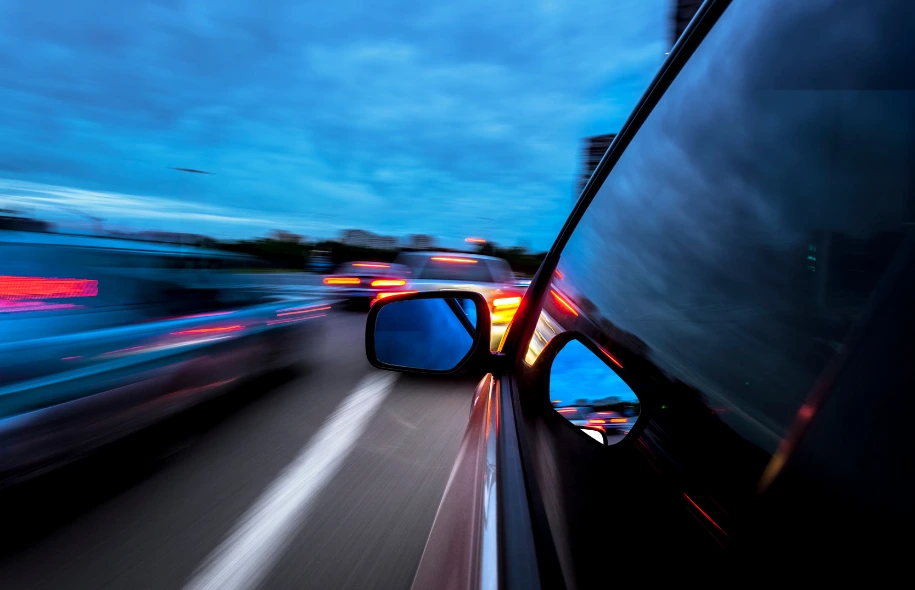
Why speeding crashes tend to cause worse injuries
Speeding changes a crash in three big ways:
-
Less reaction time. Even a one-second delay matters when vehicles are moving fast.
-
Longer stopping distance. Higher speed increases the distance required to brake to a stop.
-
More severe forces. When speed rises, crash energy rises sharply, which often translates into more severe trauma.
NHTSA highlights how speed contributes to greater crash severity, reduced vehicle control, and increased stopping distance, and it links speeding to a large share of fatal crashes.
Common crash scenarios where speed becomes the central issue
Speeding may show up in many forms, including:
- Rear-end collisions involving high closing speeds
- Lane-change crashes where a speeding driver “appears out of nowhere”
- Intersection crashes where a driver cannot stop in time
- Head-on collisions caused by passing or losing control
- Multi-vehicle chain reactions, especially on higher-speed roads
- Work zone collisions, where reduced speed and attention are critical
In many of these cases, speed is not just a detail. It is the reason the crash happened and the reason the injuries became life-changing.
Who can be liable in a speeding accident case?
The speeding driver is often the obvious starting point, but liability can be broader depending on the facts:
-
A driver’s employer if the driver was working at the time (for example, deliveries or service calls)
-
A vehicle owner in certain negligent entrustment situations (like knowingly letting an unsafe driver use the vehicle)
-
Another negligent driver who triggered a chain reaction, even if the speeder was not the only cause
-
Government or contractors in limited circumstances involving hazardous road conditions (these cases require careful analysis and strict rules may apply)
A strong investigation looks beyond the first story told at the scene and focuses on what actually caused the collision.
How we prove speeding when nobody clocked the driver
Insurance companies often argue, “There’s no radar, so you can’t prove speed.” That is not how real crash investigations work. Depending on the case, proof can come from:
-
Crash reconstruction using vehicle damage, crush analysis, and scene measurements
-
Event Data Recorder (black box) downloads showing speed, braking, throttle, and steering inputs
-
Video evidence (traffic cameras, nearby business cameras, dash cams, doorbell cams)
-
Phone data and app activity showing distraction, navigation prompts, or timing that supports speeding
-
Witness testimony about aggressive driving, weaving, tailgating, or rapid acceleration
-
Police documentation including citations, diagrams, measurements, and narrative observations
The earlier a lawyer gets involved, the better the odds of preserving this evidence before it disappears.
What damages can you recover after a speeding crash?
A speeding crash can create losses that extend for years, sometimes for life. Depending on the claim, damages may include:
- Past and future medical bills
- Rehabilitation and therapy costs
- Lost income and reduced earning capacity
- Pain, suffering, mental anguish, and loss of enjoyment of life
- Property damage and out-of-pocket costs
- Scarring, disability, and long-term care needs
- Wrongful death damages when a loved one is killed
Florida’s auto insurance system can also affect what damages are available and when, especially for pain and suffering. Under Florida’s tort threshold, pain and suffering damages in many motor vehicle cases require an injury that meets defined seriousness criteria, including permanent injury, significant scarring, or death.

Comparative fault can change a speeding case fast
Insurance companies often try to shift blame, even when the other driver was clearly speeding, by arguing you “should have avoided it,” “changed lanes,” or “stopped suddenly.” Florida’s comparative fault rules can reduce damages based on a person’s percentage of fault, and in many negligence actions, a person found more than 50% at fault may be barred from recovery.
That is one reason why early evidence preservation and clear liability framing matters so much in a speeding-related claim.
Deadlines matter more than people expect
Florida’s filing deadlines can be unforgiving. Under Florida’s limitations statute, an action founded on negligence is generally subject to a two-year limitations period.
There can be exceptions and special rules depending on the case, the parties involved, and when an injury is discovered, but waiting too long can damage your leverage and, in some cases, end a claim entirely.
What to do after a suspected speeding crash
If you are physically able, these steps can protect both your health and your potential claim:
-
Get medical care immediately, even if symptoms seem mild at first.
-
Call law enforcement and ask for a crash report.
-
Photograph the scene, vehicles, skid marks, debris, and weather conditions.
-
Get witness names and contact details before they leave.
-
Avoid guessing or apologizing at the scene, facts first.
-
Do not give a recorded statement to an insurer without advice.
-
Preserve your evidence, including dash cam footage and phone photos.
Speeding cases often turn on details that disappear quickly, which is why acting early can make a measurable difference.
Why choose Dennis Hernandez Injury Attorneys for a speeding crash case?
Speeding cases require more than “basic claim handling.” They often require reconstruction, medical causation work, and a negotiation posture that anticipates insurer defenses from day one.
When you hire Dennis Hernandez Injury Attorneys, you get a team that:
- Treats evidence like a deadline-driven mission, not an afterthought
- Knows how to build speed-related liability using real proof, not assumptions
- Documents injury impact in a way that supports real value, not “quick settlement” numbers
- Prepares every serious case as if it may need to be tried
We have recovered millions and millions for injured clients, and we are ready to put that experience to work for you.
Call 855-529-3366 for a free case evaluation. No fee unless we win.
Florida Speeding Accident FAQs
Why Choose Dennis Hernandez Injury Attorneys After a Speeding Accident in Florida?
When seeking legal representation, experience, thorough preparation, and proven results are essential.
At Dennis Hernandez Injury Attorneys, we have secured millions of dollars for our clients injured in speeding accidents. This reflects our dedication to their cases. We operate on a no-win, no-fee basis, meaning our clients pay nothing upfront. They only owe us if we successfully obtain compensation for them.
We are committed to fighting for your rights!
Recommended Reading
Legal Guidance in Minutes