



Table of Contents
- Why Do Multi-Car Crashes Feel More Confusing Than a Typical Crash?
- What Is a Multi-Vehicle Collision?
- What Causes Most Multi-Vehicle Collisions in Florida?
- What Injuries Are Common in Multi-Vehicle Collisions?
- Why Is Fault Harder to Prove in a Pileup?
- Who Can Be Liable in a Florida Multi-Car Collision?
- What Evidence Matters Most in a Multi-Car Collision Claim?
- What Is a Florida Multi-Vehicle Collision Claim Worth?
- What Should You Do After a Pileup or Chain-Reaction Crash?
- ow Can Dennis Hernandez Injury Attorneys Help With Multi-Car Collision Cases?
- Multi Vehicle Collisions FAQs
Multi-car collisions can turn an ordinary drive into chaos within seconds, especially when one impact triggers a chain reaction and vehicles start striking each other from multiple directions. If you were involved in a pileup or a three-car-plus crash in Florida, you are usually dealing with more than physical injuries and vehicle damage, you are also dealing with a complicated blame game where several drivers, several insurance companies, and several versions of the story collide at once.
Dennis Hernandez Injury Attorneys helps Floridians injured in serious multi-vehicle crashes, including drivers, passengers, pedestrians, and families facing catastrophic outcomes. We have recovered millions and millions for injured clients, and we approach multi-car collision claims with a clear goal: identify every responsible party, preserve the evidence before it disappears, and push back when insurers try to shift fault or minimize what you are going through. We fight to get you paid!
Why Do Multi-Car Crashes Feel More Confusing Than a Typical Crash?
A two-car crash is often a direct dispute between two drivers and two insurers. However, a multi-car collision can involve overlapping impacts, chain reaction timing disputes, and competing arguments about who started the event versus who failed to avoid it. In these cases, it is common for one driver to blame the driver behind them. In contrast, another may blame the driver ahead of them, and someone else may claim they were pushed into the collision with no chance to react.
Insurance companies know that confusion creates leverage, because when liability looks “shared,” insurers often delay, offer less, or pressure injured people into accepting quick settlements before the facts are clear. A well-built claim reduces that confusion by reconstructing the sequence of impacts and proving which actions were negligent, which actions were unavoidable, and which parties have insurance coverage that can realistically pay for the full harm.
What Is a Multi-Vehicle Collision?
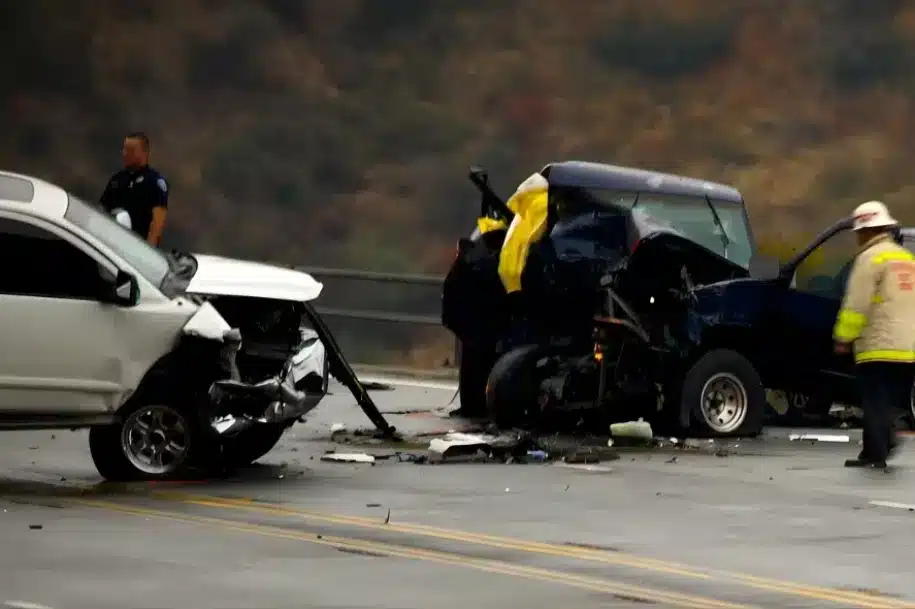
A multi-car collision (also called a pileup or chain-reaction crash) typically involves three or more vehicles in a single event. In these situations, one initial crash leads to additional impacts in rapid succession. A common example is a rear-end impact that pushes a vehicle forward into another car. This can then trigger more collisions. Sometimes vehicles spin into adjacent lanes or are struck again after coming to rest.
These crashes are particularly dangerous because people can be hit more than once, sometimes from different angles. Additionally, injuries can be compounded by secondary impacts that are not obvious from the first collision alone.
Where do multi-vehicle crashes happen most often?
Multi-car collisions often occur in places where traffic is dense and speeds change quickly, including highways, interchanges, busy arterial roads, and large intersections where drivers brake suddenly. They also tend to spike in situations involving limited visibility, congestion, aggressive merging, or abrupt stops caused by hazards ahead. For instance, stalled vehicles, debris, or emergency activity can contribute.
What Causes Most Multi-Vehicle Collisions in Florida?
Multi-vehicle crashes can involve several contributing factors at once. Still, many of them start with one or two preventable mistakes that set off a chain reaction.
How does distracted driving lead to multi-vehicle collisions in Florida?
Looking down at a phone, adjusting navigation, eating, or dealing with passengers can take a driver’s attention off the road just long enough to miss braking traffic, drift lanes, or rear-end another vehicle. This situation then triggers multiple impacts behind and around them.
How does speeding, or driving too fast for conditions, cause multi-car crashes in Florida?
Speed reduces reaction time and increases stopping distance. So, when traffic slows suddenly, a speeding driver can initiate the first rear-end collision. This can also create the impact force that pushes multiple vehicles into each other.
How does tailgating and following too closely trigger chain-reaction crashes in Florida?
Following too closely is a major multi-car trigger because it leaves no space to brake safely, and once one driver hits the car in front, the drivers behind often have even less time to react, especially if they are also tailgating.
How do aggressive driving and unsafe lane changes cause multi-vehicle accidents in Florida?
Cutting in and out of traffic, abrupt merges, and last-second lane changes can lead to sudden braking, sideswipes, and loss of control scenarios. As a result, multiple vehicles are pulled into the crash sequence.
How do weather, poor visibility, and slick roads increase the risk of Florida pileups?
Rain, fog, and reduced visibility can increase pileup risk, especially when drivers fail to slow down or increase following distance. In addition, slick roads can turn a simple braking event into a skid that blocks lanes and causes secondary collisions.
How do sudden stops and traffic backups lead to multi-vehicle collisions in Florida?
Chain-reaction crashes often begin when traffic slows unexpectedly, including at bottlenecks, construction areas, or congestion points. When one driver fails to brake in time, this triggers the first impact.
How do poor road conditions or roadway design issues contribute to multi-car crashes in Florida?
Potholes, debris, unclear markings, and inadequate signage can contribute to multi-car events, especially when drivers react abruptly or lose control while trying to avoid a hazard.
How can mechanical failures cause multi-vehicle crashes in Florida?
Brake failures, tire blowouts, and other mechanical problems can prevent a driver from stopping or maintaining control. This can lead to a chain reaction crash when traffic is dense.
What Injuries Are Common in Multi-Vehicle Collisions?
Because multi-car collisions can involve more than one impact, injuries can be more severe and more complex than in a typical crash. Symptoms can also be delayed because adrenaline masks pain and stiffness.
Common injuries include:
-
Traumatic brain injuries and concussions, often from head impact with windows, pillars, headrests, or airbags.
-
Spinal cord injuries and serious neck and back trauma, including herniated discs and nerve involvement.
-
Fractures in the arms, legs, ribs, hips, and pelvis, sometimes requiring surgery and prolonged rehabilitation.
-
Internal injuries and internal bleeding, particularly when seatbelts, airbags, and blunt force trauma compress the torso.
-
Facial injuries, dental injuries, and lacerations from impact and airbag deployment.
-
Burns in cases involving fire, chemical exposure, or post-crash explosions.
-
Psychological injuries like anxiety, depression, and post-traumatic stress symptoms, especially after violent multi-impact crashes.
Even “moderate” injuries can become expensive when they require imaging, injections, therapy, specialist care, time off work, and ongoing follow-up for months.
Why Is Fault Harder to Prove in a Pileup?
In a pileup, the key issue is often the sequence of collisions, because the first impact may not be the only negligent impact. For example, one driver may initiate the chain reaction. However, another driver may still be responsible for a later collision if they were speeding, distracted, following too closely, or failed to take reasonable steps to avoid a second impact when there was time and space to do so.
Insurance companies also look for ways to break causation, meaning they may argue that one collision caused your injury, but a different collision caused your vehicle damage, or they may claim your injuries came from “a different impact,” hoping to reduce what their insured must pay. A strong claim connects the injury story to the crash mechanics with objective evidence.
Who Can Be Liable in a Florida Multi-Car Collision?
Multi-vehicle crashes often involve several potentially responsible parties, and identifying them early can make the difference between a limited recovery and a full financial plan for your injuries.
Potentially liable parties can include several people or organizations, depending on what caused the crash.
Who can be held liable as a negligent driver in a Florida multi-car collision?
Drivers may be liable for distraction, speeding, tailgating, unsafe lane changes, impairment, or failure to maintain control, and in many multi-car events, more than one driver shares responsibility.
When can a vehicle owner be responsible for negligent entrustment in a Florida multi-vehicle crash?
If a driver was operating a vehicle owned by someone else, the owner may be relevant depending on the facts, especially if there were known safety issues or an unsafe driver was knowingly allowed to operate the vehicle.
When can an employer or commercial vehicle operator be liable for a Florida multi-car accident?
If a commercial driver was working at the time of the crash, employer responsibility and commercial insurance layers may apply. Additionally, these cases often involve additional records that help prove negligence, including training history, dispatch information, and maintenance documentation.
When can a government entity be liable for roadway maintenance issues in a Florida multi-vehicle collision?
If poor road conditions, inadequate signage, or maintenance failures contributed to the crash, a government entity may be part of the liability picture. Although these claims often involve special rules and shortened notice requirements, early evaluation is important.
When can a manufacturer be liable for defective components in a Florida multi-car crash?
If a defect, such as brake failure or a tire blowout, contributed to the pileup, a product liability analysis may be appropriate. Those cases require careful preservation of the vehicle and component evidence before repairs or disposal occur.
What Evidence Matters Most in a Multi-Car Collision Claim?
In multi-vehicle cases, evidence is what turns confusion into clarity, especially when drivers and insurers give competing accounts of what happened.
Important evidence often includes:
-
Crash reports, diagrams, and supplemental officer narratives
-
Photos and video of vehicle positions, damage patterns, skid marks, debris fields, and lane markings
-
Dashcam footage, traffic camera footage, and business surveillance video
-
Witness statements, especially from people not directly involved in the crash
-
Vehicle data and event information when available (speed, braking, and pre-impact conditions)
-
Phone records in distraction cases, when appropriate and legally obtainable
-
Weather reports, road condition documentation, and construction or maintenance records when relevant
-
Medical records that document symptoms early and show progression over time
Because footage can be overwritten quickly and vehicles can be repaired or totaled, early action matters, even if you are still treating and still learning the long-term impact of your injuries.
What Is a Florida Multi-Vehicle Collision Claim Worth?
There is no single “standard” value because a multi-car collision claim depends on the injuries, the medical path, the impact on work and daily life, the strength of liability proof, and the amount of available insurance coverage across all responsible parties.
A properly evaluated claim may include compensation for:
-
Past and future medical expenses, including specialists, imaging, surgery, rehabilitation, and ongoing care.
-
Lost wages and loss of future earning capacity if the injury limits your work long-term.
-
Pain and suffering, emotional distress, and loss of enjoyment of life.
-
Property damage and out-of-pocket costs, including transportation expenses and replacement services.
Insurance companies often focus on the first few weeks, while serious injuries can reshape years, so a fair evaluation requires a longer view that matches your real prognosis.
What Should You Do After a Pileup or Chain-Reaction Crash?
If you are able, call 911 and accept medical evaluation, because multi-impact crashes can cause hidden injuries, including head trauma and internal injuries that do not feel severe right away. If it is safe to do so, take photos of the scene, including all vehicles involved, lane positions, road conditions, and any obvious hazards. Also, collect witness contact information, since neutral witnesses can be critical in a case with multiple competing fault arguments.
Be careful with early insurance calls, especially recorded statements, because in a multi-car collision you may not yet know the full sequence of impacts, and guessing can be used against you later. It is usually smarter to focus on your health, preserve what evidence you can, and get guidance before you engage in detailed insurer narratives.
How Can Dennis Hernandez Injury Attorneys Help With Multi-Car Collision Cases?
Multi-vehicle crash claims need structure, because the number of parties and insurers can overwhelm injured people quickly, and that chaos often benefits the defense. Our approach is designed to bring order to the case and build leverage early.
We typically help by:
-
Identifying every responsible party and every insurance layer, including commercial policies when they exist
-
Preserving evidence quickly, including video requests and documentation that can disappear
-
Reconstructing the crash sequence using damage patterns, timing, and objective records
-
Building medical proof that reflects your full recovery path, not just the first emergency visit
-
Valuing the case with a long-range plan that accounts for future care and future work limits
-
Negotiating firmly, and preparing the case for litigation when insurers refuse fair value
We have recovered millions for clients, and we bring that same commitment to complex multi-car collision cases where insurers often try to hide behind confusion. We fight to get you paid!
If you want a clear next step, call 855-529-3366 for a free case evaluation.
Multi-Vehicle Collision FAQs
Recommended Reading
- Florida Truck Accident Lawyer | Dennis Hernandez Injury Attorneys
- Florida Car Crash Lawyer | Dennis Hernandez Injury Attorneys
- Florida Slip and Fall Attorneys | Dennis Hernandez Injury Attorneys
- Florida Motorcycle Accident Lawyer | Dennis Hernandez Injury Attorneys
- Florida Pedestrian Accidents | Dennis Hernandez Injury Attorneys
- Florida Brain Injury Lawyer | Dennis Hernandez Injury Attorneys
Legal Guidance in Minutes