


Table of Contents
- Why are drunk driving accidents so dangerous in Florida?
- What should you do immediately after a suspected drunk driving accident (DUI)?
- Why do injuries often seem worse days later?
- What types of evidence disappear quickly, and how can they be preserved?
- How does a criminal DUI case affect a civil action for injuries?
- What damages can be repaired after an accident caused by drunk driving?
- How Does Comparative Guilt Affect a Drunk Driving Case in Florida?
- When Can Punitive Damages Be Applied in DUI Accident Cases in Florida?
- What time limits apply to lawsuits related to drunk driving accidents in Florida?
- What should you look for when choosing a law firm for DUI accident cases?
- Why choose Dennis Hernandez Personal Injury Attorneys for a DUI accident claim?
- FAQ: Questions Do People Ask After an Accident Involving a Drunk Driver
A collision caused by a drunk driver can be catastrophic, and the consequences often go far beyond what you expect. Medical needs can escalate quickly, from emergency care to follow-up visits, physical therapy, and ongoing evaluations. Work can come to a halt without warning, creating immediate stress about income and job security.
Calls from insurance adjusters may begin before you feel stable, and early statements can later be used to limit your compensation. A drunk driving accident lawyer in Florida can step in early to preserve key evidence, handle communications, and push back against unfair attempts to shift blame, so you can focus on recovery.
If you were injured by a driver under the influence of alcohol or drugs, you may be entitled to compensation for medical expenses, lost income, pain and suffering, and other related losses. If the crash caused the death of a loved one, a wrongful death lawsuit may allow your family to pursue financial compensation and accountability.
At Dennis Hernandez Injury Attorneys, we have recovered millions and millions for injured clients. If you want answers and a clear plan, contact us for a FREE CONSULTATION at 855-529-3366. You pay no fee unless we recover compensation. We fight to get you paid!
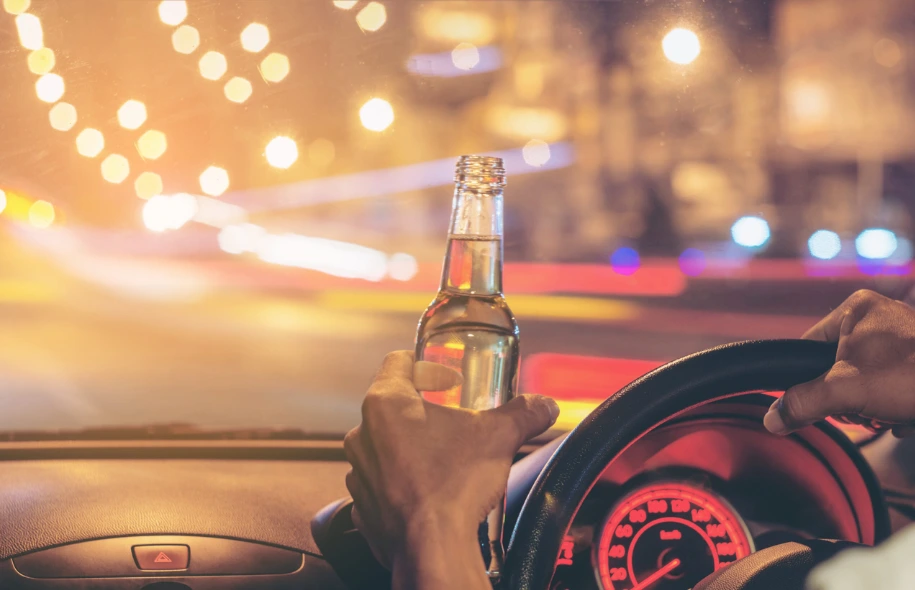
Why are drunk driving accidents so dangerous in Florida?
Drivers under the influence of alcohol or drugs often make predictable mistakes, and these mistakes can lead to high-risk collisions. Alcohol and drugs can decrease reaction time, reduce coordination, and distort judgment. These effects usually manifest as lane departure, sudden changes in speed, disregard for traffic signs, and late braking.
Many DUI accidents also involve higher impact speeds. A sober driver may notice brake lights earlier, anticipate a change in a traffic light, or reduce speed before a curve. A driver under the influence may not process the same signals in time. Even a small delay can change everything, including whether a collision becomes a “near miss” or a violent impact.
Example: A driver runs a red light at night and hits a car that was turning at the intersection. Several witnesses report slurred speech and the smell of alcohol. The accident results in a fracture and a concussion. In this situation, the complaint is not just about speed. It’s about proving intoxication, accurately recording witness statements, and securing nearby video footage before it is overwritten.
What is considered drunk driving under Florida law?
Florida’s DUI statute is Fla. Stat. § 316.193. It addresses driving under the influence of alcohol, controlled substances, and certain chemical substances, and it sets standards tied to alcohol concentration. In practice, impairment can be shown through more than one route. Proof may come from breath or blood testing, officer observations, standardized field sobriety exercises, and video that captures driving conduct or physical indicators of impairment.
A civil injury claim does not depend on a DUI conviction. Civil cases are built around liability and damages, while criminal cases are prosecuted by the state and focus on penalties. The two matters can share evidence, but they follow different procedures, deadlines, and burdens.
Testing rules are also important. Florida’s implied consent framework appears in Fla. Stat. § 316.1932. After a lawful DUI arrest, refusal can trigger separate consequences. From a civil perspective, refusal does not stop the case. Instead, it often increases the importance of alternative proof, such as surveillance footage, body camera video, 911 audio, and witness accounts.
Example: A driver refuses a breath test. Body camera video shows unsteady walking and confusion during basic questioning. A nearby business camera captures lane weaving shortly before impact. Together, these facts can support a persuasive impairment narrative, even without a reported breath result.
What should you do immediately after a suspected drunk driving accident (DUI)?
Your first priority is safety and medical care. If you can move to a safe location without worsening an injury, do so. Call 911. Get a medical evaluation as soon as possible, even if symptoms seem minor. Some serious conditions, including concussion symptoms and internal injuries, can appear hours or days later.
Next, document what happened right away. Small but important details can fade quickly, especially when the other driver is impaired, distracted, or uncooperative. When the scene is chaotic and several people are talking at once, clear notes, photos, and a simple timeline can help preserve the facts.
If you are able, consider steps like these:
- Take wide and close photos of the scene, vehicle positions, damage, skid marks, debris, traffic signals, signs, lighting, and weather.
- Photograph license plates, VIN stickers (if visible), and any rideshare, company, or commercial markings on vehicles.
- Photograph visible injuries as soon as it is safe to do so, then continue to document bruising as it develops.
- Write down what you remember while it is fresh, including the time, direction of travel, lane position, and what happened right before impact.
- Note potential impairment cues without confronting the driver, such as slurred speech, confusion, balance issues, and the smell of alcohol.
- Get names and contact information for witnesses, and ask what they saw in one or two sentences.
- Request the officer’s name, badge number, and the crash report or incident number.
- Avoid arguing fault at the scene, and do not accept pressure to “keep it informal.”
- Preserve any dashcam footage, and ask nearby businesses if cameras might have captured the crash.
Be cautious when your insurance company calls. Adjusters may sound sympathetic, but they often look for early statements they can later reinterpret. A safer approach is straightforward: confirm your contact information, request the claim details in writing, and say you will follow up after you have had time to review everything.
Why do injuries often seem worse days later?
Delayed symptoms are common after a collision. Adrenaline can mask pain, swelling often increases over time, and inflammation can change how you move. What feels manageable at first can become a significant limitation a day or two later.
Concussion symptoms also often appear later. Headaches may start after sleep. Sensitivity to light may show up after screen time. Focus problems may surface when you return to work. Dizziness and nausea can follow as your body settles.
Neck and back symptoms may not appear right away and can worsen over the next several days. As inflammation builds, muscle spasms may intensify, making the area feel tighter, stiffer, and more painful. Disc injuries may also develop, and irritation or pressure on nearby nerves can become more noticeable over time. In some cases, radiating pain starts after later activity, not at the point of impact.
These patterns matter from both a medical and legal standpoint. Insurance companies watch gaps in treatment closely. They may argue that delayed care means the injury was minor or unrelated. Consistent care creates a clear timeline and makes that argument harder to support.
Example: You decline an ambulance because you feel shaken but “okay.” Two days later, dizziness and nausea begin. You go to the emergency room and are referred for imaging. Early documentation, including the initial ER visit and a prompt follow-up appointment, helps connect the symptoms to the collision.
What evidence typically proves incompetence and guilt?
Strong cases are built on verifiable evidence, not assumptions. The goal is to show what happened, why it happened, and how it caused your injuries. In DUI-related crashes, you often need proof of both negligent driving and impairment, including the facts that show intoxication.
Common types of evidence include:
- The police crash report and any supplemental reports or amendments.
- The investigating officer’s observations, including notes on speech, balance, coordination, and odor.
- Body-worn camera footage and dashcam video.
- 911 recordings, call logs, and dispatch (CAD) records.
- Witness statements, especially from neutral bystanders.
- Footage from nearby security cameras, traffic cameras (when available), and doorbell cameras.
- Breath or blood test results, plus refusal documentation under implied consent procedures.
- Vehicle damage patterns, debris fields, and scene measurements (including skid marks and impact points).
- Event Data Recorder (EDR) data, when available.
A key point is that police crash reports have limits in court. Under Fla. Stat. § 316.066(4), the crash report itself, and certain statements given to law enforcement for completing the report, generally cannot be used as evidence at trial.
That does not make the report worthless. It usually functions as a roadmap, identifying people, vehicles, locations, and possible sources of proof. A strong case is then built with supporting evidence that stands on its own, such as independent officer observations, video, witness testimony, physical scene evidence, and medical documentation.
What types of evidence disappear quickly, and how can they be preserved?
Evidence in a DUI crash can disappear fast, sometimes within hours or days. Surveillance and traffic cameras often record on short loops and overwrite footage. Damaged vehicles may be repaired, declared a total loss, moved, or released from a tow yard before critical details are documented. Crews can clear debris, weather and traffic can erase skid marks, and witness memory can fade or shift over time.
The most time-sensitive items often include:
- Security, traffic, and doorbell camera footage near the scene and along the vehicle’s route
- Body-worn camera video, dashcam footage, and any in-car recordings
- Emergency recordings, call logs, and dispatch (CAD) records
- Witness names, phone numbers, and brief recorded recollections while details are fresh
- Tow yard location, storage status, and a hold request to prevent early release or disposal
- Photos of vehicle damage, impact points, airbags, seatbelts, and interior evidence before repairs
- Scene photos showing lane markings, signage, lighting, debris, and gouge or yaw marks
- Event Data Recorder (EDR) data and vehicle telematics data, when available
- Evidence tied to impairment, such as refusal paperwork, testing timelines, and officer notes
- Receipts, location data, or other records that may show where the driver was before the crash (when relevant)
Preservation usually starts with a written request. A preservation letter asks the recipient to keep video, records, and the vehicle in its post-crash condition. It can also request an opportunity to inspect the vehicle before repairs, salvage processing, or disposal changes the evidence. This is not only about trial. Early preservation can strengthen settlement leverage because it shows the claim is organized, evidence-driven, and ready for scrutiny.
Example: A crash occurs near a convenience store. A security camera captures the impaired driver swerving and nearly striking another vehicle moments before impact. If the footage is overwritten, that evidence is gone. A prompt preservation request can help secure the video before it disappears.
How does a criminal DUI case affect a civil action for injuries?
A criminal DUI case can be useful because it may generate evidence and clarify what happened, but it is not required to bring a civil lawsuit. A civil case focuses on proving liability and damages. Damages may include medical expenses, lost income, reduced earning capacity, pain and suffering, and other related losses. Civil claims also examine available insurance coverage and other sources of financial recovery.
By contrast, a criminal DUI case is brought by the state and focuses on punishment, deterrence, and public safety. Its purpose is not to compensate the injured person.
An arrest for DUI can produce valuable evidence, including:
- Chemical testing records and timing, including collection time, testing method, refusal forms (if any), implied consent warnings, lab reports, chain-of-custody logs, and calibration or maintenance records.
- Body-worn camera footage showing the DUI investigation steps, including instructions given, field sobriety exercises, officer observations, and time stamps.
- Witness statements gathered by law enforcement, including contact details, recorded interviews, and any supplemental narratives or addenda.
- Charging documents and court records, including citations, probable cause affidavits, hearing entries, and transcripts or recorded testimony when available.
A guilty plea can also shift the tone of negotiations. It can weaken certain liability defenses, although damages may still be disputed. Even so, civil cases often move on their own timeline. Criminal proceedings can take months. Your medical care should not wait. Evidence preservation should not wait.
Who Can Be Responsible Besides The Drunk Driver?
In many DUI-related crashes, the impaired driver is the primary defendant, but not always the only one who may be held liable. Depending on the facts, other people or organizations can share responsibility for what happened. This becomes especially important when the driver has limited insurance coverage, or when the evidence points to broader negligence that contributed to the crash and the resulting damages.
Additional potentially liable parties may include:
- Alcohol vendors or servers, in limited situations under Florida’s dram shop statute, Florida Statutes § 768.125.
- Employers, when the driver was acting within the scope of work duties or operating a company vehicle.
- Vehicle owners, when negligent entrustment may apply.
- Other drivers, if multiple vehicles contributed to the crash sequence and resulting damages.
Florida’s “dram shop” law is narrow and built around specific exceptions. In most cases, a claim depends on proof that alcohol was willfully and unlawfully served to a minor, or knowingly served to someone who was habitually dependent on alcohol. These cases are intensely fact-driven and require strong, verifiable documentation. Receipts, surveillance footage, witness accounts, and age verification practices often become central issues.
Fault allocation can become more complex when an alcohol vendor is added as a third party. Florida courts have addressed how the state’s comparative fault framework applies in “dram shop” litigation, including how responsibility may be divided among multiple actors. Those rulings can shape how lawyers frame allegations, pursue discovery, and argue causation and fault. They can also affect negotiations by changing how each party evaluates risk and exposure.
What damages can be repaired after an accident caused by drunk driving?
Damages can include both financial and personal losses. These may involve medical bills and lost income, along with pain, suffering, and long-term effects on daily life. The value of a claim often depends on medical clarity and the overall strength of the supporting documentation. When records are detailed, consistent, and complete, they reinforce the narrative and help quantify the harm. Strong documentation leaves insurers less room to minimize compensation, stall negotiations, or deny the claim outright.
Economic damages typically include:
- Emergency care, hospital charges, imaging, and follow-up treatment.
- Physical therapy, medications, and durable medical equipment.
- Future medical care needs supported by treating provider opinions and care plans.
Lost wages, reduced hours, and missed overtime opportunities.
Reduced earning capacity in cases involving permanent or disabling limitations.
Non-economic damages may include:
- Pain and suffering.
- Disability and loss of enjoyment of life.
- Emotional distress tied to the injury, treatment, and recovery process.
In many Florida auto accident cases, recovering non-economic damages, including pain and suffering, depends on meeting the no-fault injury threshold in Fla. Stat. § 627.737. A plaintiff generally must prove a qualifying condition, such as a significant and permanent loss of an important bodily function, a permanent injury within a reasonable degree of medical probability, significant and permanent scarring or disfigurement, or death.
Whether the threshold is met is often disputed, and the outcome frequently turns on the strength of the medical proof. Detailed treatment records, diagnostic findings, and well-supported opinions from treating providers can help establish permanency, causation, and the day-to-day impact of the injury.
Example: A wrist fracture heals, but grip strength never fully returns. A treating physician documents permanent work restrictions and reduced function. That documentation can help support the argument that the serious injury threshold is met, and it can explain long-term work limitations in a concrete way.
If the crash resulted in death, Florida’s Wrongful Death Act will usually govern the related civil claim. The statute generally requires the estate’s personal representative to bring the case on behalf of the estate and eligible survivors. It also outlines the categories of damages that may be pursued, which can include lost support and services, medical expenses related to the final injury, funeral and burial costs, and certain survivor losses recognized by law, depending on the specific relationship and facts.
How do PIPs and insurance coverages affect accident claims with DUI?
Many Florida car crash claims start with Personal Injury Protection (PIP) benefits under Fla. Stat. § 627.736, Florida’s no-fault system. PIP can help pay 80% of reasonable medical expenses and 60% of lost income and related household service costs, up to the statutory limit, with a separate $5,000 death benefit.
Initial medical services generally must be received within 14 days of the crash. Medical reimbursement is typically available up to $10,000 only when a qualified provider determines an emergency medical condition, otherwise medical benefits are limited to $2,500. PIP applies without regard to fault, but insurers still apply statutory claim handling and billing rules, including the general requirement to pay or deny within 30 days after receiving written notice and proof, subject to listed exceptions.
PIP is usually just the starting point, and it often falls short once medical bills and time off work begin to add up. In a serious crash, expenses can outgrow PIP quickly. When that happens, the claim often shifts to a liability case against the impaired driver as the main route to compensation. From there, the most realistic recovery path is typically shaped by available coverage, including the driver’s bodily injury limits and any additional policies that may apply.
If the impaired driver has little or no bodily injury liability coverage, uninsured or underinsured motorist (UM/UIM) coverage can become critical. Florida’s UM framework is set out in Fla. Stat. § 627.727, including rules on how UM is offered, selected, rejected, and how stacking options are handled. In some cases, UM coverage under your own policy becomes the primary path to compensation when the at-fault driver’s limits are too low to cover the harm.
Example: An impaired driver carries only minimal bodily injury limits. Your damages quickly exceed those limits due to surgery and time away from work. In that situation, your UM coverage may become the primary path to fuller compensation, depending on your policy terms, available limits, and any applicable stacking selection.
How Does Comparative Guilt Affect a Drunk Driving Case in Florida?
Florida uses a comparative fault framework in most negligence actions under Fla. Stat. § 768.81. Under this framework, the judge or jury assigns a percentage of responsibility to each party (and, in some cases, properly identified nonparties) whose conduct contributed to the harm. The damages award is then reduced in proportion to the claimant’s share of fault. In a negligence action to which the statute applies, a claimant found to be more than 50% at fault generally cannot recover damages, with a statutory exception for medical negligence claims under chapter 766.
Insurance companies often try to shift blame after a crash. They may argue that your speed contributed, suggest you were distracted, or claim you should have avoided the collision. Because those defenses can sound convincing at first, they often require a careful, evidence-driven response.
That response starts early. It means preserving dashcam or surveillance footage, securing vehicle data when available, and gathering clear witness statements while memories are still fresh. It also means documenting the scene and damage patterns before conditions change, so the facts can be tested and verified later.
Florida recognizes an alcohol or drug defense in Fla. Stat. § 768.36. In a civil action, a plaintiff may be barred from recovering damages if the factfinder concludes that, at the time of the injury, the plaintiff was under the influence to the extent normal faculties were impaired, or had a blood or breath alcohol level of 0.08 or higher, and that, as a result of that impairment, the plaintiff was more than 50% at fault for the harm. This issue is frequently disputed in DUI-related cases when the defense argues that both parties had been drinking. In those disputes, the timeline and objective evidence often matter most.
Example: An impaired driver hits you, but the insurer argues you were also impaired and made unsafe choices. The goal is often to push your fault percentage above 50%. A clear timeline, objective medical documentation, and reliable witness accounts can help challenge attempts to assign excessive blame to you.
When Can Punitive Damages Be Applied in DUI Accident Cases in Florida?
Punitive damages are different from compensatory damages, such as medical expenses, lost wages, or pain and suffering. Their purpose is to punish especially egregious conduct and deter similar behavior in the future. In DUI-related cases, punitive damages are not automatic simply because alcohol or drugs were involved. Instead, they depend on case-specific evidence showing that the punitive damages standard is met.
Florida also imposes a procedural gate. A plaintiff generally cannot plead punitive damages unless there is a reasonable evidentiary showing that provides a basis for recovery, typically raised through a motion to amend. Financial worth discovery is also not permitted until the punitive damages pleading is allowed.
The ability to pursue punitive damages often turns on aggravating facts, such as extreme signs of impairment, reckless driving, and other clearly dangerous choices. Courts also focus on procedure. In Florida, a plaintiff generally must obtain court permission to plead punitive damages after making a reasonable evidentiary showing in the record or by proffer.
Florida also has a specific intoxication exception statute, Fla. Stat. § 768.736. It provides that Fla. Stat. §§ 768.725 and 768.73 do not apply when the defendant was under the influence at the time of the misconduct, as defined by the statute. In practice, that matters because § 768.725 addresses the burden of proof for entitlement to punitive damages, and § 768.73 sets statutory limitations on punitive damages awards. Even in serious DUI cases, punitive damages still require careful proof and proper pleading, including compliance with the § 768.72 gatekeeping process.
Example: A driver is arrested with clear indicators of impairment. Witnesses report near-collisions and repeated swerving before impact. Video footage shows the driver speeding through traffic moments before the crash. Taken together, these facts may support a punitive damages claim, but only if the evidence is properly developed and the claim is pleaded through the required Florida procedure.
What should you look for when choosing a law firm for DUI accident cases?
DUI cases often turn on the specific facts and the quality of the evidence, from the initial stop or crash response through the testing process. For that reason, effective legal representation usually starts with an evidence-driven review to identify gaps, anticipate likely defenses, and strengthen the case early.
Ask questions like:
- How soon do you send preservation letters to prevent video and records from being lost or overwritten?
- Do you coordinate vehicle inspections before repairs, salvage, or release from a tow yard?
- How do you obtain body-worn camera footage, 911 audio, call logs, and dispatch (CAD) records?
- How do you document future medical care needs in serious injury cases?
- Can you explain Florida’s “serious injury” threshold and how medical evidence supports it?
- Can you explain the Florida procedure for pursuing punitive damages claims?
Ask who will handle your case day to day, and who will be your main point of contact throughout the process. It is also worth confirming how the firm communicates, whether by phone, email, or a client portal, and how quickly you can typically expect a response. Clear expectations from the start can reduce stress and uncertainty while you focus on recovery.
Why choose Dennis Hernandez Personal Injury Attorneys for a DUI accident claim?
DUI cases demand swift, organized action from day one. Our approach centers on early evidence preservation and disciplined case development, so key proof is not lost. We move quickly to secure dashcam footage, body-worn camera video, surveillance recordings, 911 audio, police reports, toxicology results, arrest records, and any available phone data. We also identify and interview witnesses early, while memories are still fresh, and document scene conditions that can change or disappear within days.
At the same time, we build a clear, well-supported damages record that can withstand insurer scrutiny. We focus on medical clarity and strong documentation, which helps protect the treatment timeline and reduces the openings insurers often use to devalue claims. When insurers raise unfair causation arguments, we respond with medical records, treating provider input, and, when needed, qualified expert support. We prepare every case as if it will go to litigation, because trial readiness often strengthens settlement leverage and can improve results.
Dennis Hernandez Injury Attorneys has recovered millions and millions for injured clients. If you were hurt by a driver under the influence of alcohol or drugs, act quickly. Key evidence can disappear within hours or days. An organized record can protect your claim, and a clear plan can protect your compensation.
FREE CONSULTATION: Call 855-529-3366. No charge unless we are able to obtain compensation for you.
Our Clients Witness Our Commitment
We achieve outcomes by demonstrating empathy, insight, and steadfast dedication. Our commitment to our clients is evident as we answer their calls at any time, visit them in medical facilities, and vigorously advocate for the compensation they rightfully deserve, among various other efforts. Below are a few examples of unsolicited testimonials we’ve gathered from clients in Florida:
”
Client Testimonials
“Everyone at Dennis Hernandez has been very helpful. Since this is my first time having to see a lawyer for a car accident, they have been so instrumental in helping me understand the whole process of my case. I would recommend anyone in this situation to come and speak with a lawyer here. Thank you all for everything!”
– Kimberly R.
”
Client Testimonials
“My sister was involved in a vehicle accident during the 1st day of her work visit in 2017. While not knowing anyone in Florida and, my sister being a badly hurt, non english speaking foreigner residing in a different country without ability to be present, her case was somewhat lengthy and complex to handle. I believe choosing the law firm of Dennis Hernandez Associates P.A. over others to represent her was the right move.”
– Peter T.
”
Client Testimonials
“Dennis Hernandez’s team were great, their whole staff was very helpful and patient with me after I was involved in an accident. They answered all of my questions and closed the case much quicker than I expected. This was my first time needing to hire an attorney, and I’m glad I chose them.”
– Meli H.
”
Client Testimonials
“We would like to thank the office of Dennis Hernandez and associates for assisting us with our accident case. Dennis Hernandez staff could not have been any nicer. It made a tough time better and we thank everyone for their kindness and professionalism throughout the entire time. We highly recommend their services.”
– Ida K.
”
Client Testimonials
“I love them. They really care about my problems after my crash. I had dropped another lawyer before going to them and they made me feel good. Their team worked hard to get me what I needed and I am grateful for that. Couldn’t be any happier. Thanks!”
– J.T.
”
Client Testimonials
“I would 100% recommend this firm! Dennis Hernandez & Associates were excellent! They were extremely responsive and very informative every step of the way. They put my mind at ease during this stressful time. I couldn’t have asked for a better team! Thank you both!”
– Sara V.
”
Client Testimonials
“This is an incredible team of lawyers. Dennis is brilliant and he will attack every point the defense uses against you and he will make them look silly, his trial skills are better than TV. I would be happy with any of the lawyers separately, any day, any case, but together they are unstoppable. If you are hurt call Dennis Hernandez and his Associates, listen to what they say, believe in their methods and they will take care of your case. If it goes to trial, they will be the best you can find. I know, because they just won my case in a huge way.”
– Michael W.
FAQ: Questions Do People Ask After an Accident Involving a Drunk Driver
Legal Guidance in Minutes