



Table of Contents
- Why Isn’t “Self-Driving” Always Fully Driverless?
- What Are the Levels of Vehicle Automation?
- What Does Florida Law Say About Autonomous Vehicles?
- Why Can Self-Driving Crashes Make Blame Harder to Sort Out?
- What Causes Most Self-Driving and Driver-Assist Crashes?
- Who Can Be Liable for a Self-Driving Car Accident in Florida?
- How Can Comparative Fault Affect a Self-Driving Crash Claim?
- How Do Florida No-Fault Rules Apply to Self-Driving Crashes?
- What Is the Deadline to File a Self-Driving Crash Lawsuit in Florida?
- What Evidence Matters Most in a Self-Driving Crash Case?
- What Should You Do After a Self-Driving or Driver-Assist Crash?
- What Compensation Can a Florida Self-Driving Crash Claim Include?
- Florida Self-Driving Car FAQs
If a self-driving car hits you, or if you are inside one during a crash, it may seem like a normal car accident at first. However, the insurance company will start looking at software, sensors, updates, and “driver supervision” rules. That is where many people get stuck. Self-driving crashes can involve more people and more data. This gives insurers more chances to deny or delay claims, even if your injuries are serious.
At Dennis Hernandez Injury Attorneys, we assist injury victims throughout Florida. We build strong cases that insurers cannot dismiss as “just a technology issue.” We have recovered millions for our clients and bring that same energy to modern crash claims. In these cases, computers, manufacturers, and drivers may all share responsibility. We fight to ensure you receive compensation!
Why Isn’t “Self-Driving” Always Fully Driverless?
Many vehicles on Florida roads are not truly driverless, even if the marketing makes them sound that way, because most consumer systems are advanced driver assistance that still requires a human to supervise and be ready to intervene. Federal safety guidance also draws a clear distinction between driver assistance and future automated driving systems, and notes that fully self-driving vehicles are still a developing technology rather than something the public can broadly purchase and use today. (NHTSA)
This distinction matters in a claim, because liability can hinge on what level of automation was actually engaged, what the system was designed to do, what it warned the driver about, and whether the system was being used inside its intended conditions.
What Are the Levels of Vehicle Automation?
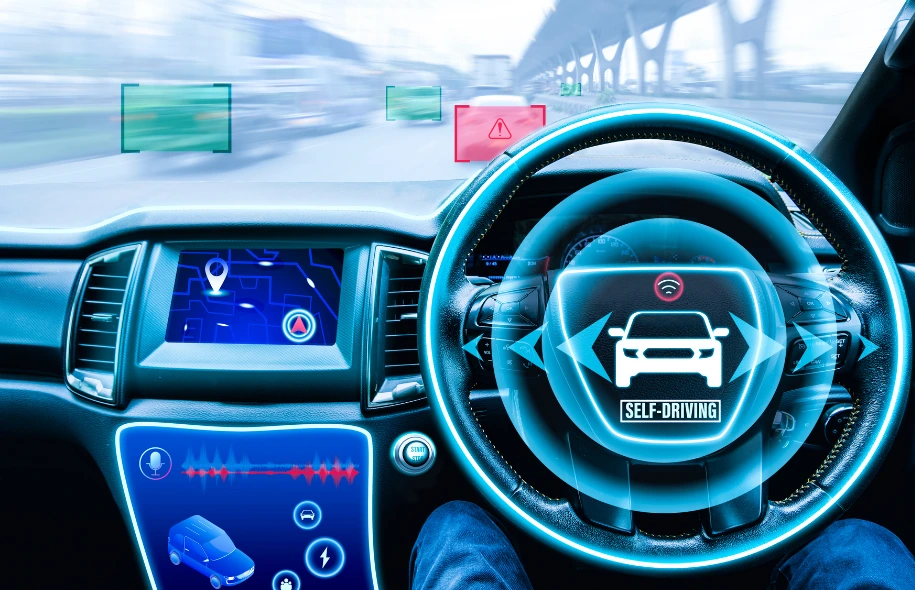
Engineers and regulators often reference automation “levels” to describe what the vehicle can do and what the human must do. SAE J3016 is the common framework, ranging from Level 0 (no automation) to Level 5 (full automation). (legacy.sae.org)
NHTSA also publishes consumer-facing summaries describing these levels and emphasizing that, at lower levels, you still drive and you still monitor. (NHTSA)
A practical way to think about it is this:
- Driver assistance and partial automation can help steer, brake, or maintain speed, but the human still carries the real-time responsibility to watch the road and react.
- Conditional automation can handle more, but may still require a human to take over when the system requests it.
- High automation and full automation are closer to true driverless operation, but only within defined conditions and design limits.
For your case, the critical questions become, what level was active, what the vehicle asked the human to do, and whether the system performed safely in the situation it encountered.
What Does Florida Law Say About Autonomous Vehicles?
Florida has specific statutory language that addresses autonomous vehicles and fully autonomous vehicles, and it is more permissive than many people realize.
Florida statutes define an “automated driving system,” define “autonomous vehicle,” and define “fully autonomous vehicle” as a vehicle equipped with an automated driving system designed to function without a human operator. (flsenate.gov)
Florida law also states that a licensed human operator is not required to operate a fully autonomous vehicle as defined in the statutory definitions, and it allows a fully autonomous vehicle to operate regardless of whether a human operator is physically present. (leg.state.fl.us)
That does not mean every crash becomes a “manufacturer-only” case. It means the legal landscape in Florida already contemplates driverless operation in certain contexts, which affects how fault is investigated and how insurers frame responsibility.
Why Can Self-Driving Crashes Make Blame Harder to Sort Out?
In a standard crash, the main dispute is often about driver behavior, speeding, distraction, following distance, or failure to yield. In a self-driving case, the dispute can multiply quickly, because each party may claim the other should have prevented the crash.
You may see arguments like these:
- The human “misused” the system or failed to intervene.
- The vehicle was outside its operational design domain, meaning it was not supposed to function reliably in that environment.
- A sensor was blocked, dirty, misaligned, or impaired by weather or glare.
- A software update changed braking or object detection behavior.
- A third-party repair, modification, or calibration issue caused the system to malfunction.
- A mapping or localization error caused the vehicle to misread the road.
Our job is to cut through those narratives and prove what happened with evidence that holds up, not assumptions and marketing language.
What Causes Most Self-Driving and Driver-Assist Crashes?
Even advanced systems can struggle with edge cases, unusual road geometry, confusing lane markings, work zones, poor lighting, and rapidly changing conditions. Some crashes still look very “traditional,” like rear-end collisions and unsafe lane changes, but the root cause may be automation behavior combined with human reliance.
Common causes we investigate include:
How Can System Limits and Sensor Misreads Cause Crashes?
Cameras, radar, and other sensors can misinterpret objects, fail to classify hazards correctly, or react too late, especially in complex scenes. Even small recognition delays can matter at highway speeds, and the resulting impact forces can cause serious injuries.
How Does Driver Overreliance Lead to Delayed Takeovers?
When a vehicle feels like it is driving itself, many people let their guard down, even when the system requires constant monitoring, and that delay in human reaction can turn a near miss into a collision.
How Can Software Make Wrong Decisions in Real-World Driving?
Autonomous logic is built to interpret objects and decide what to do, but real-world conditions can produce combinations the system does not handle well, such as unexpected pedestrian movement, unusual vehicle profiles, debris, or confusing temporary construction markings.
How Can Poor Maintenance, Calibration, or Missed Updates Cause Crashes?
Advanced systems rely on proper calibration and current software. A missed update, improper sensor alignment after a repair, or a poor calibration procedure can lead to unpredictable performance.
How Can Cybersecurity and Connectivity Risks Affect Safety?
Vehicles that rely on interconnected systems raise cybersecurity concerns, and regulators have highlighted the importance of safety and security as automation develops. (Department of Transportation)
Who Can Be Liable for a Self-Driving Car Accident in Florida?
Liability in the context of vehicle accidents can be a complex issue, as it often hinges on various factors such as the specific circumstances surrounding the incident, the level of automation involved, the design of the vehicle, and the manner in which the system was utilized at the time of the crash. It is important to know that more people may be responsible in a vehicle collision than usual.
When Can the Human Driver or Supervising Operator Be Liable?
If a human was behind the wheel or tasked with supervision, they may still be liable for negligence, such as failing to intervene, speeding, impaired driving, distraction, or engaging automation in unsafe conditions.
When Can the Vehicle Owner Be Liable?
Vehicle owners can face liability based on maintenance failures, negligent entrustment, or failure to keep the vehicle properly updated or safe to operate, depending on the circumstances.
When Can the Manufacturer or Parts Suppliers Be Liable?
If the crash involves a defective design, manufacturing defect, or inadequate warnings and instructions, the manufacturer, and sometimes component suppliers, can be targets for product liability claims. These cases often involve deep technical investigation and expert analysis.
When Can Software Developers or System Integrators Be Liable?
Autonomous behavior is heavily driven by software, and a defect in decision-making logic, perception algorithms, or system integration can contribute to a collision.
When Can Commercial Operators, Fleets, or Testing Companies Be Liable?
If the vehicle was operating as part of a fleet, a delivery program, or a testing deployment, additional compliance duties, logs, and operational rules may apply, which can expand evidence and accountability.
When Can Government Entities Be Liable for Road Conditions?
Some crashes are worsened by poorly maintained roads, confusing signage, or dangerous roadway design. Claims against government entities have special rules and deadlines, so early evaluation matters.
How Can Comparative Fault Affect a Self-Driving Crash Claim?
Florida uses a comparative fault framework, and for many negligence actions, a person found more than 50 percent at fault may be barred from recovering damages. (Florida.Public.Law)
In practice, insurance companies may try to inflate your share of fault by arguing you “should have known” the system limitations, or that you reacted incorrectly in a confusing automation scenario. A well-built case pushes back with objective proof of what the system did, what it warned, and what a reasonable person could have done in the time available.
How Do Florida No-Fault Rules Apply to Self-Driving Crashes?
Many self-driving cases still begin under Florida’s auto insurance structure, including PIP coverage, then shift into bodily injury claims when the injuries meet the legal threshold. Florida’s statute addressing the serious injury threshold includes categories such as significant and permanent loss of an important bodily function, permanent injury within a reasonable degree of medical probability, significant and permanent scarring or disfigurement, and death. (flhouse.gov)
Self-driving technology does not change the reality that severe injuries require long-term care and financial support. It changes who may ultimately pay, and how hard insurers fight to avoid paying.
What Is the Deadline to File a Self-Driving Crash Lawsuit in Florida?
Florida’s limitations statute includes a two-year period for negligence actions, and missing a deadline can destroy an otherwise strong case. (leg.state.fl.us)
Self-driving cases often take time to investigate because data must be preserved quickly, technical records must be requested, and multiple insurers may be involved, so waiting is risky.
What Evidence Matters Most in a Self-Driving Crash Case?
The biggest difference between a typical crash and a self-driving crash is the amount of machine-generated evidence that may exist, and the risk that it disappears or becomes harder to obtain if you do not act fast.
Key evidence can include:
Vehicle data and event logs
Many vehicles store snapshots of sensor inputs, automation status, braking, steering, and warnings near the time of the crash. Preserving this data can be pivotal when a company claims the system was not engaged or claims the driver ignored a warning that never occurred.
Over-the-air update history
A software update can change braking behavior, object detection, or steering logic. Knowing what software version was installed, and when changes occurred, can be essential to showing defect or failure to warn.
Calibration and repair records
If a vehicle had windshield replacement, front-end repair, alignment work, or sensor recalibration, those records can reveal whether the system was restored to proper condition or left vulnerable to errors.
Video, dashcams, and third-party footage
Footage can reveal lane markings, visibility, traffic flow, and the timing of braking or evasive action, which helps experts interpret what the system likely “saw” and how it responded.
App and rideshare records
If the crash involved a rideshare vehicle or a platform-connected vehicle, trip records, driver status, and platform communications can help identify the correct insurance coverage and responsibility chain.
Medical documentation that connects the crash to the injury
Brain injuries, spinal injuries, and orthopedic trauma do not always show their full impact immediately. Consistent medical documentation is what ties the collision forces and symptoms to the injuries in a way insurers cannot easily dispute.
What Should You Do After a Self-Driving or Driver-Assist Crash?
If you suspect automation was involved, the steps are similar to any crash, but with extra focus on preserving evidence.
Seek medical care right away, even if you feel “mostly okay,” because adrenaline masks symptoms and delayed complications are common, especially with head and neck trauma. Report the crash and request documentation, and take photos of the vehicles, the roadway, and any visible sensors or damage points if you can do so safely. Avoid guessing about what the system did when speaking with insurers, because speculation can be used against you later.
If the vehicle involved belongs to you, do not reset systems or delete app data, and do not authorize repairs that could overwrite critical logs until you have guidance, because that information can become central to proving fault.
What Compensation Can a Florida Self-Driving Crash Claim Include?
Your damages depend on the injury and the life impact, but self-driving cases can involve high-value losses because the collisions can be severe and the disputes can delay timely care.
Compensation may include:
- Past and future medical treatment, rehabilitation, and therapy
- Prescription costs, assistive devices, and in-home support
- Lost wages and diminished future earning capacity
- Pain and suffering, emotional distress, and loss of enjoyment of life
- Permanent disability and long-term impairment impacts
- Wrongful death damages for surviving family members, when applicable
Every case requires careful valuation, because insurers often focus on the first few months of bills while ignoring long-term neurological, orthopedic, and psychological consequences.
Why insurers fight harder in autonomous vehicle injury cases?
Insurers often treat self-driving crashes like a technical argument rather than a human harm case, because they believe complexity reduces accountability. They may try to delay while “investigating the system,” they may claim the system performed as designed, or they may blame the victim for not anticipating automation limitations.
A strong approach is to build the case like a traditional injury claim and a technology case at the same time, with medical proof, crash reconstruction, data preservation, and a clear liability theory that a jury can understand.
How can Dennis Hernandez Injury Attorneys help?
Self-driving crashes require a legal team that is comfortable handling complex liability, multiple insurers, and fast-moving evidence. We focus on early, decisive action, so you do not lose leverage while the other side controls the data.
Our approach typically includes:
- Identifying every potentially responsible party early, not just the “driver”
- Preserving vehicle data and third-party records before they vanish
- Coordinating with qualified experts when technical interpretation is needed
- Documenting injuries in a way that matches the medical reality and the legal standards
- Negotiating from a position of strength, and preparing for litigation when insurers refuse to be reasonable
We have recovered millions and millions for clients, and we bring that same determination to emerging technology cases where accountability still matters. We fight to get you paid!
Florida Self-Driving Car FAQs
Recommended reading
- Florida Car Crash Lawyer | Dennis Hernandez Injury Attorneys
- Florida Truck Accident Lawyer | Dennis Hernandez Injury Attorneys
- Florida Motorcycle Accident Lawyer | Dennis Hernandez Injury Attorneys
- Florida Brain Injury Lawyer | Dennis Hernandez Injury Attorneys
- Florida Wrongful Death Lawyers | Dennis Hernandez Injury Attorneys
Legal Guidance in Minutes