



Table of Contents
- What makes head-on collisions so dangerous?
- What are the most common causes of head-on collisions in Florida?
- What injuries are most common in head-on crashes?
- How can a head-on crash impact families emotionally and financially?
- Why can head-on collision claims be complicated in Florida?
- How Dennis Hernandez investigate a head-on collision case?
- What compensation may be available after a head-on collision?
- What should you do after a head-on collision?
- Why choose Dennis Hernandez Injury Attorneys for a head-on collision case?
- Frequently asked questions (“FAQs”)
Head-on collisions are some of the most severe accidents on Florida roads. The forces at play can be extreme, leading to life-altering injuries. Additionally, the insurance disputes often begin quickly. Even when someone survives, recovery can take months or years. Families often have to manage medical care, lost income, and the emotional burden that comes after a violent event.
Dennis Hernandez Injury Attorneys helps people in Florida who were injured in head-on crashes. This includes drivers, passengers, and families dealing with wrongful death. We have recovered millions and millions for clients, and we take head-on collision cases seriously because the stakes are high and the evidence matters early. We fight to get you paid!
What makes head-on collisions so dangerous?
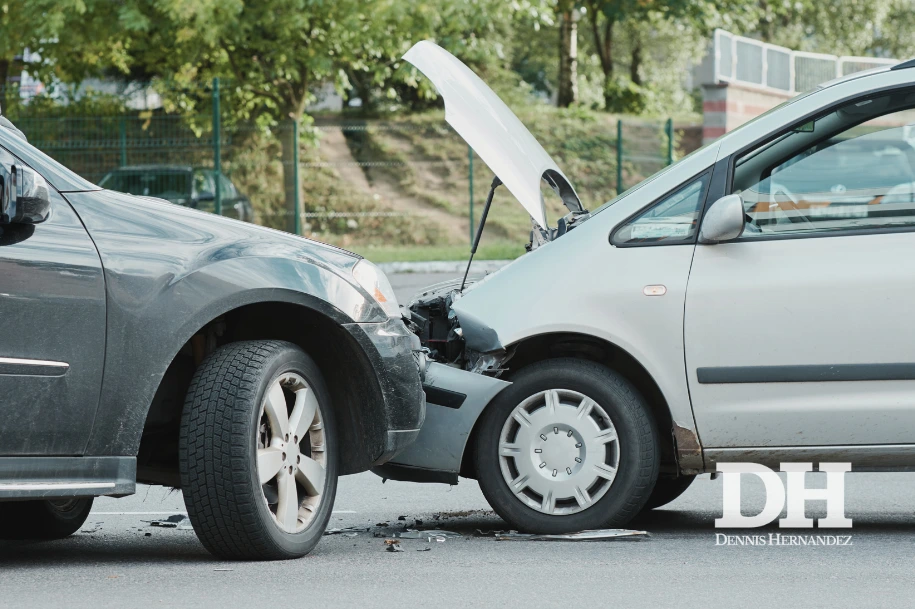
A head-on collision happens when the front ends of two vehicles strike each other while traveling in opposite directions, which means the crash forces often combine rather than cancel out, producing significant trauma even at moderate speeds. These crashes also tend to involve sudden intrusion into the passenger compartment, rapid deceleration, and multiple points of impact, which increases the risk of traumatic brain injury, spinal injuries, internal bleeding, and other catastrophic harm.
The legal side is often just as complex as the medical side because head-on collisions frequently raise questions about wrong-way driving, lane departures, visibility, impairment, and roadway conditions, and insurers may try to turn those questions into excuses to deny or reduce your claim.
What are the most common causes of head-on collisions in Florida?
Most head-on crashes are preventable, and many are tied to choices that increase risk in a matter of seconds, especially when a driver drifts left of center or enters a roadway going the wrong direction.
How Does Distracted Driving Cause Head-On Collisions?
Distraction can be as simple as looking down to read a message, adjusting a navigation screen, or reaching for something in the car, and those small lapses can lead to lane drift into oncoming traffic. Florida law restricts texting while driving, and distraction evidence can become a major liability issue when a driver crosses the center line or fails to correct in time.
How Can Fatigue or Falling Asleep Lead to a Head-On Crash?
Drowsy driving can mimic impairment because reaction time drops, judgment suffers, and drivers may drift across lane markings without realizing it, especially late at night or during long highway drives. In head-on cases, fatigue becomes a key focus because the crash pattern often shows a failure to brake, correct, or respond to obvious danger.
How Do Alcohol or Drugs Increase the Risk of Head-On Collisions?
Impaired drivers are more likely to drive the wrong way, misjudge curves, miss signals, or overcorrect, and those errors can cause direct frontal impacts that are catastrophic for everyone involved. When impairment is present, the case may involve additional investigation into bars, events, or other factors, depending on the facts.
How Do Speeding and Unsafe Passing Cause Head-On Collisions?
Passing on two-lane roads, weaving through traffic, or trying to beat oncoming vehicles can create a head-on collision in an instant, and these cases often turn on the precise sequence of events, visibility, road layout, and whether the driver had time and space to complete the maneuver safely.
How Do Road Hazards and Unsafe Conditions Lead to Head-On Crashes?
Standing water, debris, poor lighting, confusing lane markings, and work zone changes can all contribute to lane departures, particularly if a driver panics, overcorrects, or encounters a sudden hazard. In some situations, responsibility may extend beyond the driver if a hazardous condition was created or ignored by a party with a duty to fix or warn.
How Can Weather and Low Visibility Contribute to Head-On Collisions?
Heavy rain, glare, and fog can reduce sight distance and increase stopping distance, and while weather is not “fault” by itself, it often exposes careless driving choices, such as speeding for conditions or following unsafe lines when visibility is limited.
What injuries are most common in head-on crashes?

Head-on collisions can cause injuries that require long-term medical care and serious lifestyle changes, even when the person initially believes they can “walk it off.” The medical reality is that adrenaline, shock, and delayed symptoms are common, particularly with brain injuries and internal injuries.
Injuries we frequently see in these cases include traumatic brain injuries, concussions, spinal cord injuries, neck injuries, disc herniations, fractures, pelvic and hip injuries, internal bleeding, organ damage, crush injuries, burns, lacerations, and soft-tissue injuries that limit function and mobility. When an injury affects cognition, balance, memory, or emotional regulation, the impact often reaches beyond the injured person and into the entire household.
How can a head-on crash impact families emotionally and financially?
Head-on crash survivors often deal with more than physical pain, because severe collisions can trigger anxiety, depression, and post-traumatic stress symptoms that make driving, working, and even sleeping difficult. Families may take on caregiving roles, coordinate appointments, and absorb the emotional strain of watching a loved one struggle through recovery, especially when symptoms fluctuate or the person’s personality and patience changes after a brain injury.
Financial pressure is also common because serious injuries can reduce household income while medical costs rise, and long-term treatment, rehabilitation, surgery, and therapy can continue long after the first hospital visit. When a crash limits a person’s ability to return to work, or forces a career change, the future cost of lost earning capacity can be one of the largest parts of the claim.
Why can head-on collision claims be complicated in Florida?
Florida’s auto insurance system affects how many claims begin, but it does not eliminate the need for a strong liability case in serious injury collisions.
What Are Florida No-Fault Basics and the 14-Day Rule?
Florida drivers generally carry Personal Injury Protection (PIP) and Property Damage Liability (PDL), and PIP can pay certain benefits regardless of fault. Many people do not realize that Florida also has a treatment deadline tied to PIP benefits, and waiting too long to seek care can create insurance problems and give insurers arguments that your injuries are unrelated or exaggerated.
When Can You File a Claim Against the At-Fault Driver?
In serious injury cases, liability claims against the at-fault driver often become the central path to full compensation, particularly when injuries involve permanent impairment, significant loss of bodily function, scarring, or other serious outcomes. Head-on collisions frequently meet the seriousness threshold because of the force involved, but the case still must be proven with medical documentation, expert support when needed, and a clear explanation of how the injuries changed your life.
Why Are Comparative Fault Arguments Common in Head-On Crashes?
Insurers often look for ways to shift blame, even in head-on collisions, by claiming overcorrection, speed, distraction, or avoidance mistakes by the victim. Florida’s comparative fault framework can reduce compensation based on assigned fault, so early evidence and a coherent crash narrative are critical, especially in cases with limited witnesses or unclear road markings.
How Can Deadlines Hurt an Otherwise Strong Case?
Florida negligence cases often have a limited time window to file suit, and waiting can also harm your claim because video footage gets overwritten, vehicles get repaired or salvaged, and witnesses become harder to locate. Even when you are focused on medical recovery, it is smart to protect the claim early so key evidence does not disappear.
How do Dennis Hernandez investigate a head-on collision case?
Head-on collision cases are built on details, not assumptions, and the most successful claims are those that prove how and why the vehicles ended up in the same lane at the same time.
Our investigation often includes reviewing crash reports, scene photos, vehicle damage patterns, roadway layout, and visibility factors, while also collecting witness statements, 911 records, and any available surveillance footage or dash camera video. In more serious cases, we may work with experts who can reconstruct the collision, analyze speeds and angles, and evaluate whether the physical evidence supports wrong-way driving, unsafe passing, or a lane departure caused by distraction or impairment.
We also focus on medical proof early because severe injuries often evolve, and the case should reflect the full scope of future care, not just the first month of treatment.
What compensation may be available after a head-on collision?
Every case is different, but head-on collision claims often include a combination of economic damages and non-economic damages that reflect both the costs and the human impact of the injury.
Economic damages may include past and future medical expenses, rehabilitation, therapy, prescriptions, future procedures, lost wages, reduced earning capacity, out-of-pocket costs, and property damage losses. Non-economic damages may include pain and suffering, emotional distress, loss of enjoyment of life, and the ways the injury affects relationships and daily function.
In some cases, punitive damages may be a consideration when the at-fault conduct is especially dangerous, such as impaired driving, although those claims depend on the specific facts and legal standards.
What should you do after a head-on collision?
The steps you take after the crash can protect your health and also protect your ability to pursue compensation.
If you can do so safely, call 911 and wait for law enforcement and medical responders, because official documentation matters and symptoms are often delayed. Get medical evaluation even if you think you are okay, especially because brain injuries, internal bleeding, and soft-tissue injuries may not feel severe until hours or days later. If possible, take photos of the vehicles, the roadway, skid marks, debris, signage, and lane markings, and collect contact information for witnesses, since witness accounts can become decisive when insurers dispute fault.
When speaking with insurance companies, be careful about giving detailed recorded statements while you are still processing trauma and learning the extent of your injuries, because early statements can be taken out of context and used to reduce your claim.
Why choose Dennis Hernandez Injury Attorneys for a head-on collision case?
Head-on crashes demand a law firm that treats the case as serious from day one, because the insurer will, and because the early evidence often determines the outcome. At Dennis Hernandez Injury Attorneys, we focus on building claims that reflect the real harm, not a minimized version designed to fit an insurance company’s first offer, and we are prepared to push back when insurers try to shift blame or downplay long-term consequences.
We have recovered millions and millions for clients, and we bring a practical, litigation-ready approach to complex collision cases, while keeping communication clear so you are not left guessing about the next step. We fight to get you paid!
If you want answers about fault, insurance coverage, and next steps, contact Dennis Hernandez Injury Attorneys at 855-529-3366 for a free case evaluation.
Frequently asked questions (“FAQs”)
Recommended reading
- Florida Car Crash Lawyer | Dennis Hernandez Injury Attorneys
- Florida Truck Accident Lawyer | Dennis Hernandez Injury Attorneys
- Florida Motorcycle Accident Lawyer | Dennis Hernandez Injury Attorneys
- Florida Brain Injury Lawyer | Dennis Hernandez Injury Attorneys
- Florida Wrongful Death Lawyers | Dennis Hernandez Injury Attorneys
- 2025 Florida Statutes – The Florida Senate
Legal Guidance in Minutes